
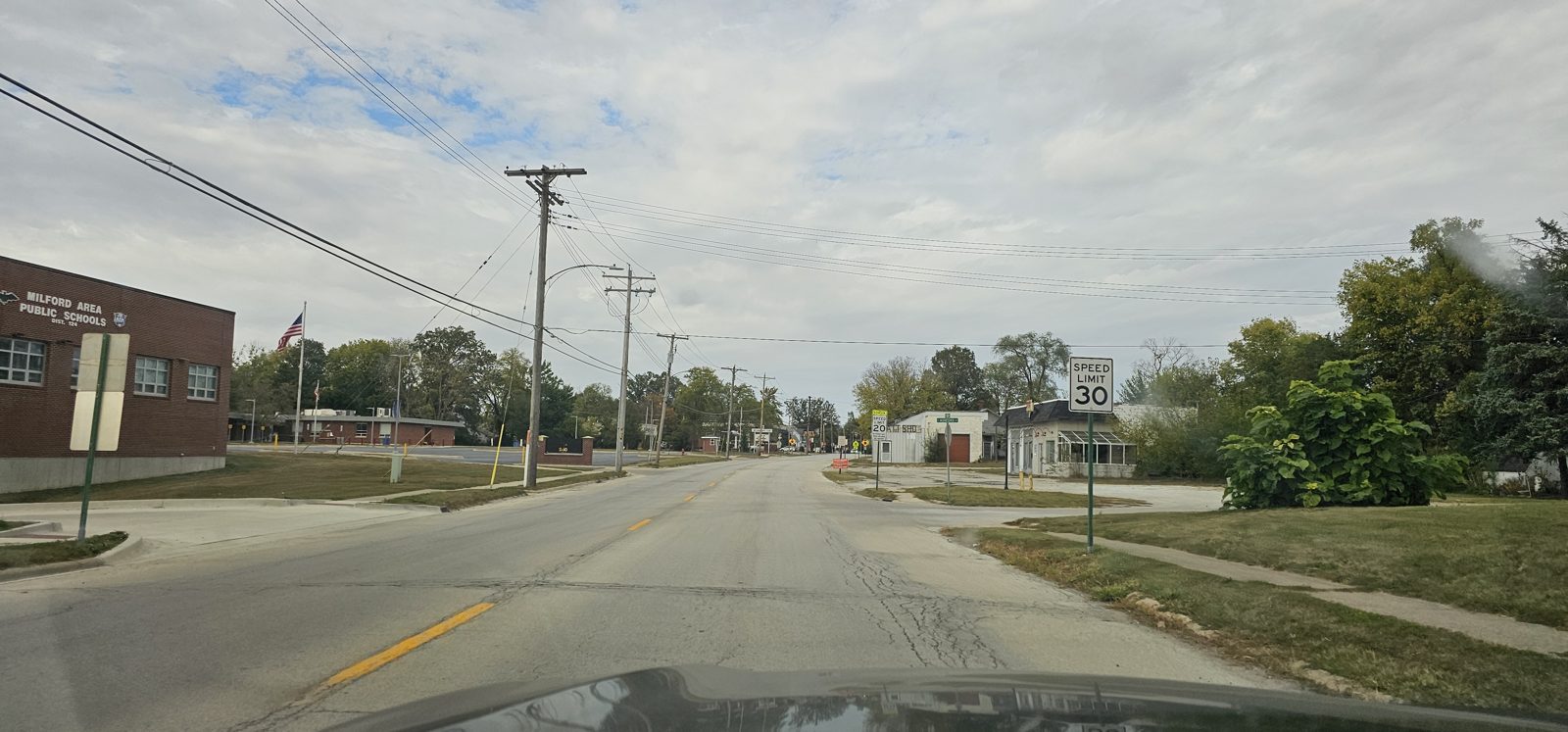
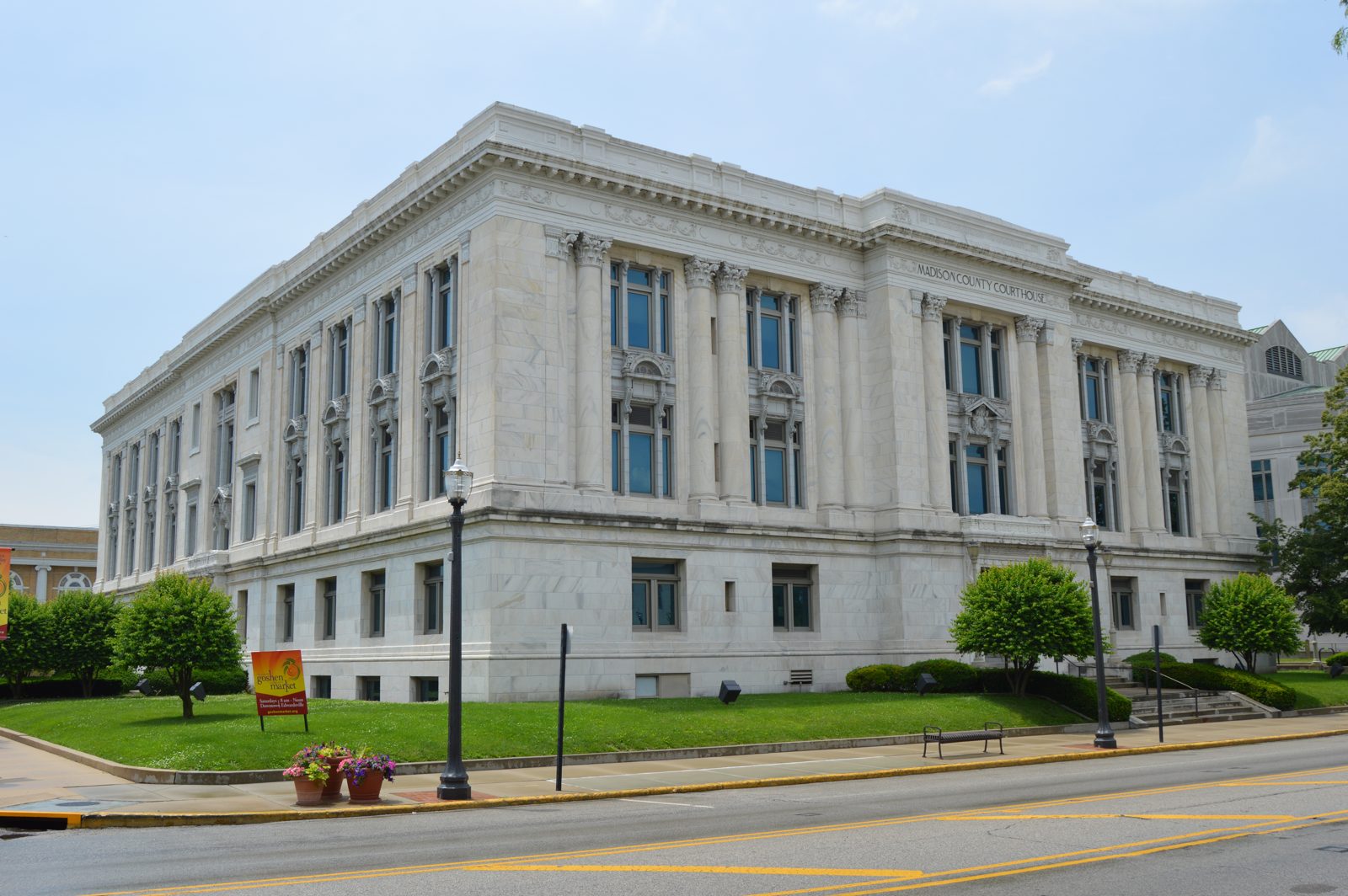
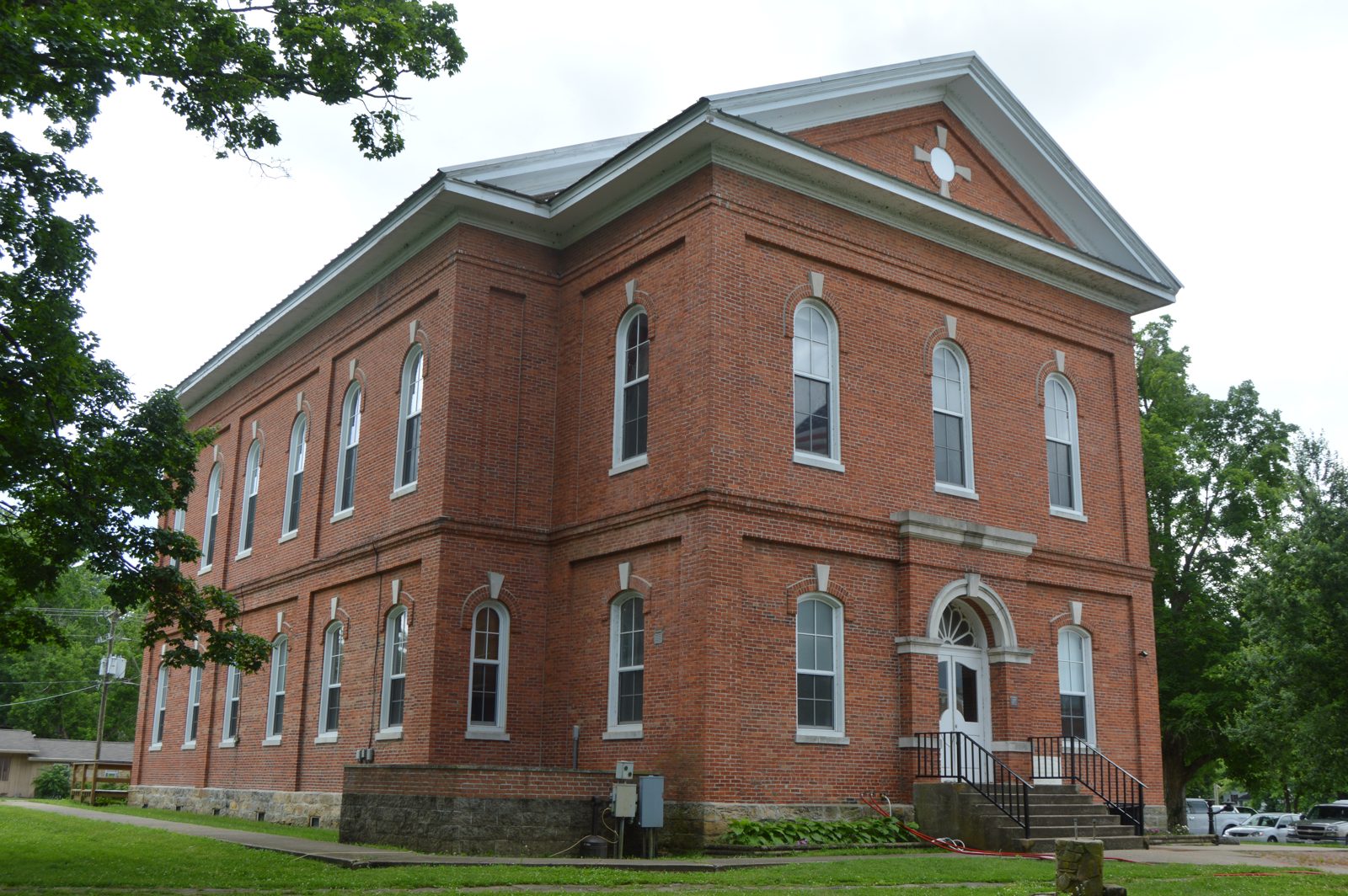
Thirty-three of Illinois' 102 counties have passed advisory referendums asking their county boards to look into dividing the state, according to a Southern Illinois University study. The same study, which compares state taxes paid with state spending received, finds that Cook County and the five suburban counties get back less than they pay, and that Central and Southern Illinois get back more.
The votes
The referendums were advisory and are not binding. The study, published in April 2025 by the Paul Simon Public Policy Institute at Southern Illinois University, says the proposal had passed in 26 counties after the November 2022 election and in 33 after the 2024 election. In all but Madison County, it passed with well over 70 percent of the vote, the study says. According to the study, 18 of the 33 counties are in the Central region, nine are in the South, five are in the Southwest, and one, Whiteside, is in the North.
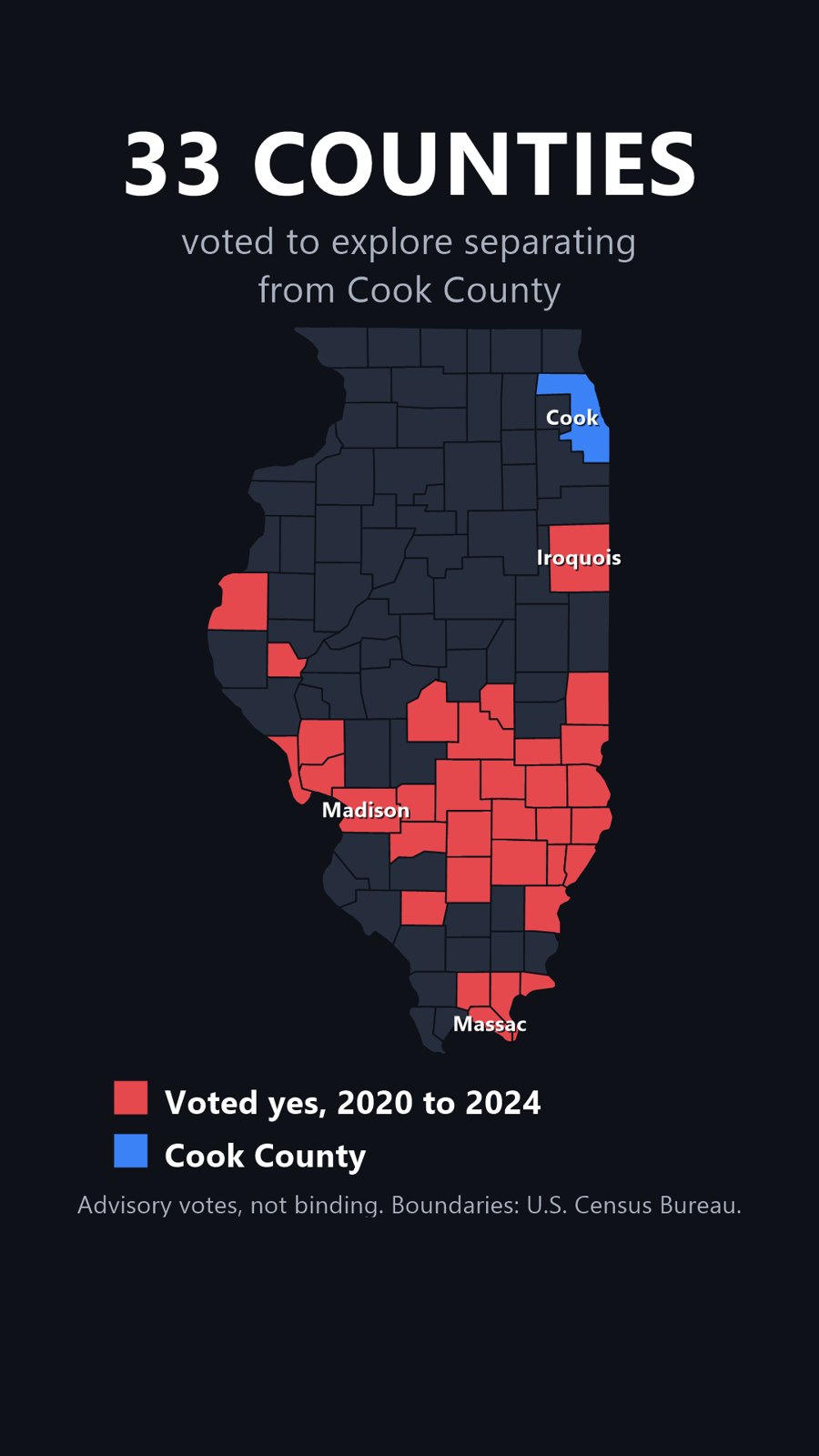
Supporters argue that Chicago and Cook County hold too much power. The study quotes G. H. Merrit, as the study spells the name, the statewide leader of a group called The New Illinois, who said in February 2024 that "Illinois gives power to favored people, groups, and municipalities" and named Chicago and Cook County among them. The study says the political hurdles to creating a new state are significant, including the Illinois legislature and the U.S. Congress, and notes that the last state carved out of an existing one was West Virginia in 1863.
What is on the ballot Nov. 3
More counties are scheduled to vote. Newsweek reports that on Nov. 3, voters in 12 Illinois counties will consider nonbinding measures on separating from Chicago and Cook County. Eleven of them, Coles, Gallatin, Hamilton, Henderson, Macoupin, McDonough, Monroe, Piatt, Saline, Warren and Washington, are voting on questions from a group called the Illinois Separation Referendum. Ford County has its own question, which asks state lawmakers, not the county board, to pursue a split, according to Newsweek. Several Adams County townships will also vote, but Newsweek says there is no countywide vote there.
Newsweek says Gov. JB Pritzker opposes the referendums, and that they are backed by state Rep. Brad Halbrook, a Republican, and Loret Newlin, the group's director. Newsweek says the November votes could add to the 33 counties that have already backed similar measures. We will update this story after the results.
What each region gets back
The authors, John L. Foster and John S. Jackson, both professors emeritus of political science at Southern Illinois University, divided state spending in each region by the state taxes collected there. A ratio below 1.00 means the region pays more in state taxes than it receives in state spending. A ratio above 1.00 means the opposite. For fiscal year 2021, the most recent year in the study:
- Cook County: $0.78 back for every $1 paid
- The five suburban counties (DuPage, Kane, Lake, McHenry and Will): $0.58
- Central Illinois (50 counties): $2.04
- Southern Illinois (19 counties): $3.09
The study covers seven fiscal years, 2013 to 2016 and 2019 to 2021. In every one of those years, Cook County and the suburban counties were below $1.00, and the Central and Southern regions were well above it. Southern Illinois ranged from $2.77 to $3.57. The study notes that Cook County came close to breaking even in 2016, at $0.96, then fell to $0.78 by 2021.
How the numbers were built
The authors used county revenue and spending data collected by the Commission on Government Forecasting and Accountability (CoGFA) for 2013 to 2021. Some dollars, mainly corporate income tax on the revenue side and pension payments on the spending side, cannot be traced to a county. The authors divided those across regions in the same proportions as the dollars that can be traced. The ratios are therefore adjusted estimates, not audited county accounts.
Why downstate gets more
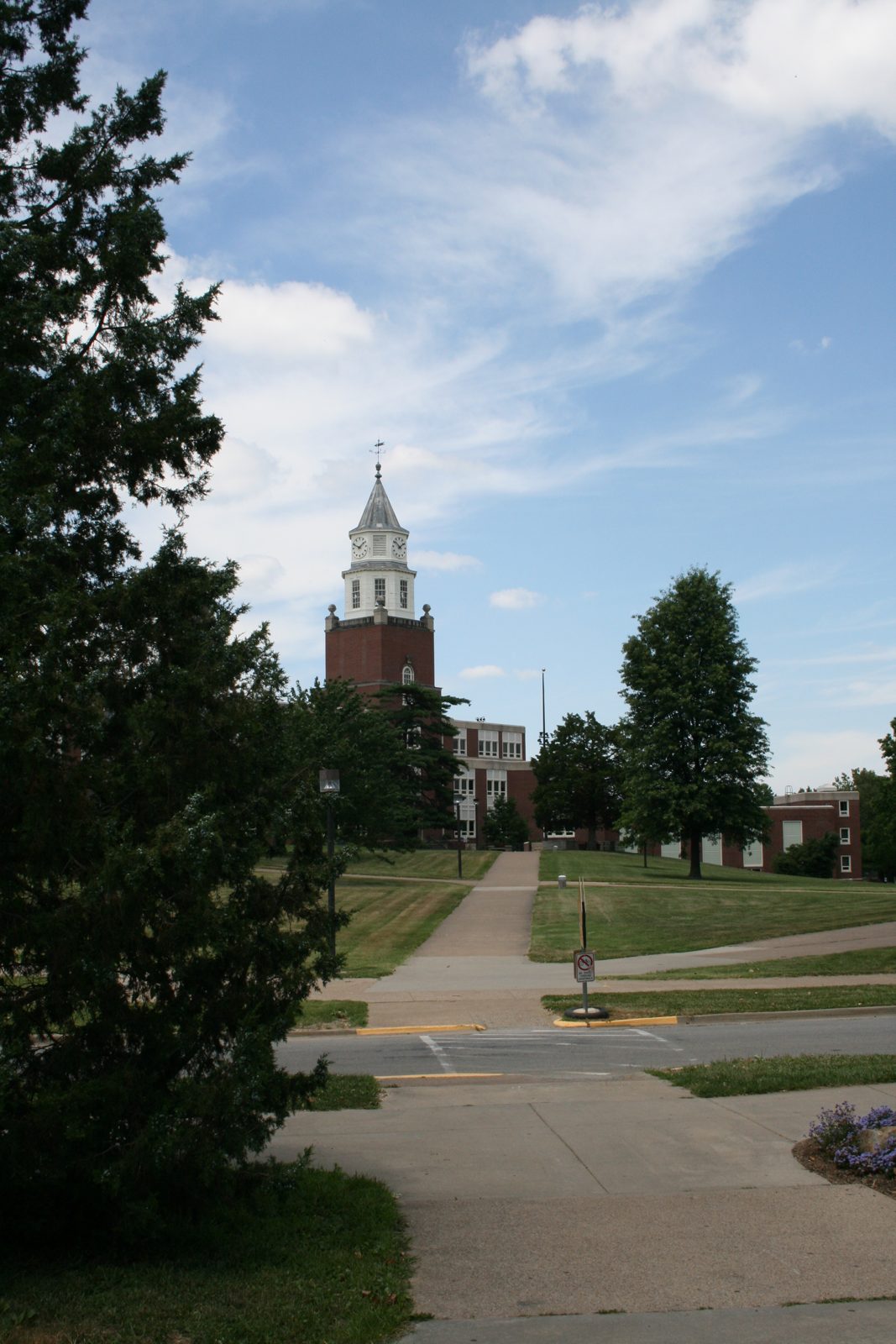
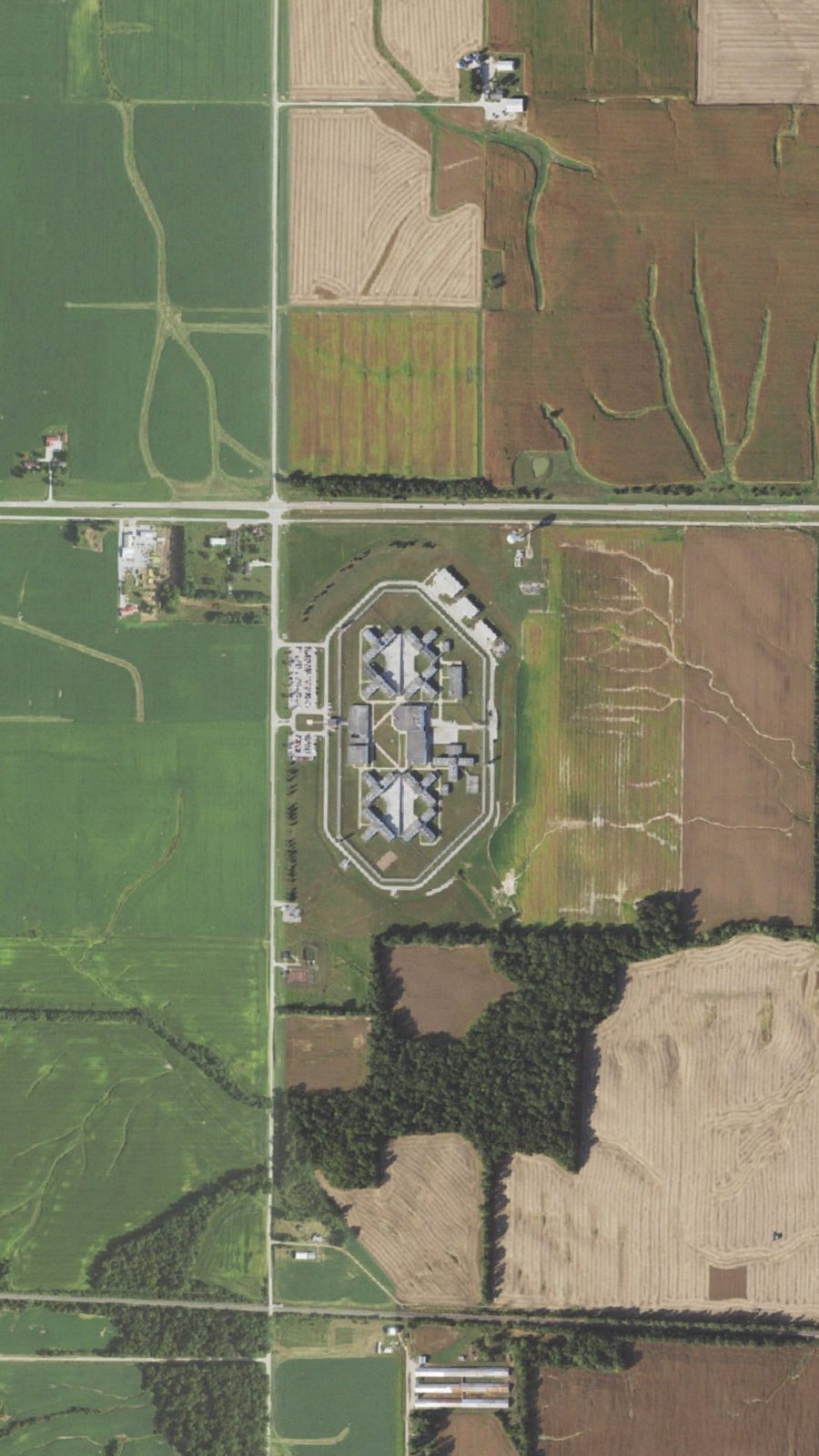
The study points to the structure of the budget. The largest spending item was Medicaid, which is need based, so poorer counties have higher enrollment. The second largest was K-12 aid, where the funding formula favors poorer and rural districts. The study also says that nine of the state's twelve public universities, virtually all state prisons and parks, and the state agency headquarters in Springfield are downstate. It describes the state income and sales taxes as not progressive, and says counties with higher incomes generate more revenue through them.
A caution about the 33 counties
The regional ratios do not describe the 33 counties that voted. The study looked at them as a group: all but Madison are small and rural, together they account for about 4.5 percent of the state's economic output, and they received $4.0 billion from the state in 2021 against $2.2 billion in revenue, a ratio of 1.82. That is lower than the Central and Southern regional figures. The study says the yes-vote counties generally lack the large state facilities their neighbors have. The exceptions are three of the state's smallest counties, Hardin, Johnson and Pope, each of which gets back more than $4 for every $1 paid.
The study also concludes that it seems "quite unlikely" that downstate counties with large state facilities, such as Jackson, Randolph, Sangamon and Union, would join a new state, which it calls a significant hurdle to any division.
What we could not confirm
We did not independently audit the underlying county data, and we are relying on the authors' regional groupings and adjustments. The latest year in the study is fiscal year 2021. We did not find newer regional figures. We are describing the study's findings, not saying that any region should or should not receive state spending.
Our question
Southern Illinois gets back more than three dollars for every dollar it sends in, while Cook County gets back seventy-eight cents. Should Cook County be the one voting to cut them off? Tell us on YouTube, Instagram or Facebook, or write to contact@reofact.com.
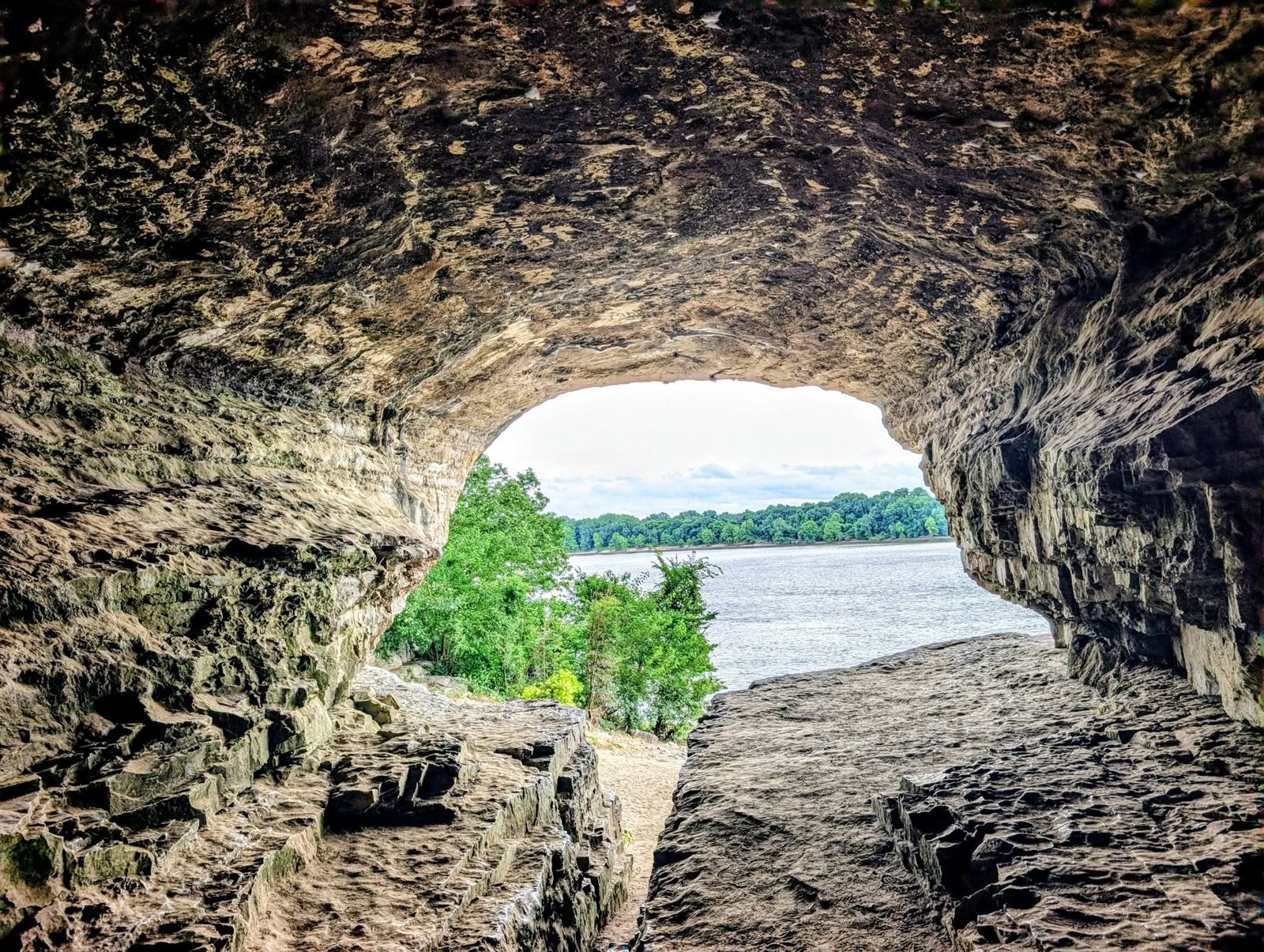
Photos: Madison, Hancock and Pope county courthouses by Nyttend, public domain. Vandalia State House by Art davis, CC BY-SA 4.0. DuPage County courthouse by Teemu008, CC BY-SA 2.0. Champaign County farm road and the Effingham Cross by Daniel Schwen, CC BY-SA 4.0. Superman statue by G1B71, CC BY 4.0. Cave-in-Rock by Sherie Loverkamp, CC BY-SA 4.0. Garden of the Gods by Djngsf, CC BY-SA 4.0. SIUC Pulliam Hall by Bradley Furlow, CC BY-SA 4.0. SIUE sign by Tyler Warren, CC BY-SA 3.0. Lawrence aerial: USGS. Map boundaries: U.S. Census Bureau. Other photos: ReoFact.